






SLIP SLOP SLAP
The jingle I still remember, and the problem we actually solved.
Slip Slop Slap: I want to share a good news story. And honestly… it’s a relief just to write that. There is so much bad news right now that it can feel risky to look up. Like every headline is a trap door.
This is the kind of good news where I genuinely felt I could exhale, because something actually improved. What’s more, it’s personal for me, because it lives in my childhood.
Growing up in Australia, the sun does not feel like a vibe. I would say it feels more like a force. The heat has its own personality, and the light is so bright that without sunglasses you are forever squinting.
And woven through that childhood were the cartoon community messages on TV. From Norm and Libby in Life Be In It, to those all singing, all dancing vitamin ads, my childhood memories feel almost musical. Addictive jingles sending messages of health and wellbeing. Of course my mind wonders straight off to what ever happened to community messaging? But thats another post.
Sid the Seagull and Slip, Slop, Slap.
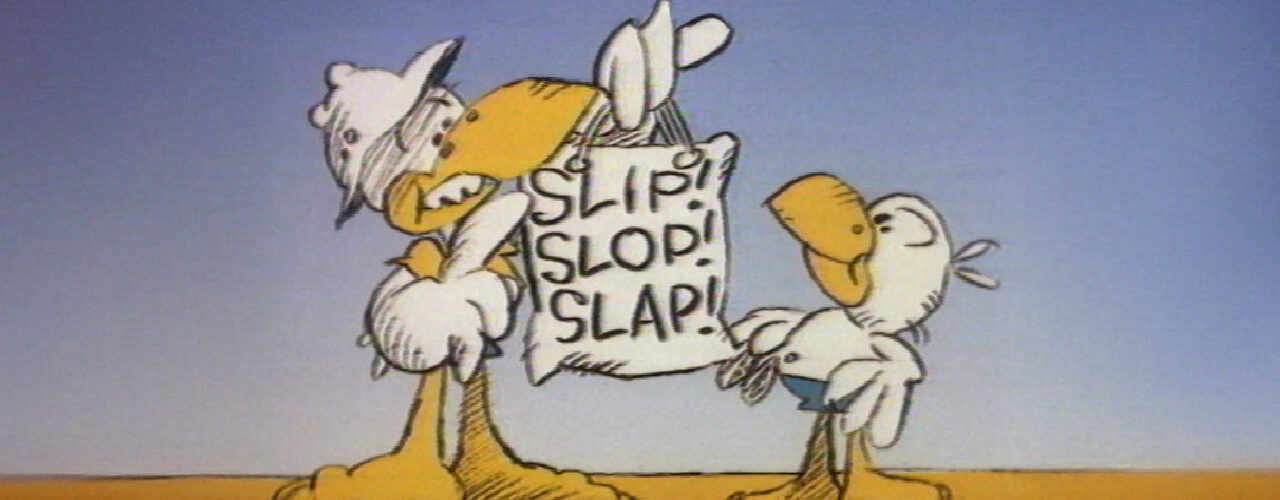
And then there was the infectious Sid the Seagull. Board shorts, hat, umbrella in hand, tap dancing across our screens and stretching those ‘s’ sounds into a chant: Slip. Slop. Slap.
I can still hear it. I remember all the words and can visualise it without trying. It is one of those cultural memories that sits in your body, not just in your head. From the Cancer Council Victoria, its one of the most successful health campaigns in Australia’s history launched in 1981, and it became part of how Australia learned to live with the reality of intense UV exposure.

Back then, I also carried a belief that the ozone hole was right above us. Or at least close enough to feel like it was.
I now know that memory is not quite true in the literal sense. The ozone hole is a seasonal phenomenon over Antarctica, and it does not extend over Australia. CSIRO (Commonwealth Scientific and Industrial Research Organisation) has even written about the urban legend that it reaches Tasmania, and says plainly that it does not.
But I also know why my younger self believed it. Because if you were a kid in Australia, the story arrived like emotional weather. Not just science, but urgency and fear. And it was delivered in the language that headlines love.
Ozone depletion and the ozone hole became one merged idea in the public imagination. Add to that the everyday truth that Australians were being taught to protect ourselves from the sun, and it was easy for a child to hear the wider message as: the danger is here, right here, right above your head.
Even the way adults spoke about it could make it feel immediate. If you grow up hearing that the ozone layer is thinning, that the sun is dangerous, that skin cancer is a national issue, your brain does what brains do. It stitches it into a single story you can remember. And it did not help that some reporting in past decades framed it as if the hole itself could drift over Australia and threaten specific regions.
From ‘Slip Slop Slap’ to the Ozone Layer
So here is the thing I love about revisiting this story now.
It is not just a story about fear. It is also a story about what happened next. Because the ozone layer is one of the rare examples where humanity saw a global problem, listened to scientists, built international agreements, and then actually changed industrial behaviour at scale.
This week, the World Meteorological Organisation reported that the 2025 Antarctic ozone hole was relatively small and short lived, consistent with the long term recovery trend. Copernicus also reported that it closed on 1 December 2025, earlier than usual, and was the smallest in five years.
That does not mean it is solved forever. The ozone hole still opens seasonally, and its size can still fluctuate. But the direction matters. The direction is recovery. And that recovery is strongly linked to the Montreal Protocol, the global agreement to phase out ozone depleting substances.
When I read that, something softened in me. Because lately I have been thinking a lot about how fear gets used. How it is packaged. How it is sold. How it can keep us scrolling, outraged, and braced for impact. Fear can be useful. It can be an alarm bell. But fear cannot be the only fuel.
The ozone story is a reminder that fear is supposed to hand us over to something else. To coordination. To action. To persistence. To boring, unsexy follow through. To the long work of repair. And it is also a reminder that our memories are shaped by the emotional tone of the times.
I did not hallucinate the ozone era. I lived a real cultural moment where adults were worried, where schools and parents took sun safety seriously, where public health messaging became a national soundtrack. What I misremembered, or was simply informed wrong about, was the geography, not the feeling. The feeling was accurate.
Australia has always had a complicated relationship with the sun. It gives us warmth, beaches, summer rituals, and it also carries risk.
It is estimated that around 2 in 5 people, or 43 percent, will be diagnosed with cancer by the age of 85 in Australia.
So we learned to protect ourselves, and we sang about it on TV. And now, decades later, I get to hear something else.
A story where the world responded and the curve bent. A story where science was not just shouted down or sidelined, but translated into policy and then into real change.
It is hard to describe how rare that feels right now. Not because nothing good is happening, but because so much of what is good arrives quietly, while the crisis narrative arrives with sirens.
Slip. Slop. Slap.
Maybe this is what I want more of now. Not fear as a product. Not optimism as denial. But hope as evidence.
If you want, I would love to hear your version of this.
What is one public message from your childhood that still lives in your body, for better or worse?
And what is one repair story, from anywhere in the world, that you wish more people knew?
Because I think we need those too. Not to distract us, but to remind us what is possible when we decide to act together.
Who made it the Slip Slop Slap Campaign?
Character and artwork: Alexander Stitt is credited as the creator of Sid the Seagull and the Slip Slop Slap campaign artwork.
Jingle and music: The National Film and Sound Archive credits Phillip Adams and Peter Best for the Slip Slop Slap jingle.
Campaign organisation: The campaign was launched by Cancer Council Victoria, originally the Anti Cancer Council of Victoria.
Slip Slop Slap references:
FAQ’s
What was Slip Slop Slap and why do Australians remember it so clearly?
Slip Slop Slap was a sun safety campaign launched by Cancer Council Victoria in 1981, using Sid the Seagull and a jingle to make UV protection memorable for kids and families. It became part of everyday Australian culture because it turned a serious public health message into something you could sing, repeat, and actually do.
Was the ozone hole really over Australia when I grew up with Slip Slop Slap?
The ozone hole is a seasonal phenomenon over Antarctica and it does not extend over Australia. That said, Australia does experience very high UV exposure, and ozone depletion did affect ozone levels more broadly, which is one reason the topic felt so immediate in the public imagination.
Why is the Slip Slop Slap era connected to real global progress on the ozone layer?
Because the world actually acted. The Montreal Protocol phased out ozone depleting substances, and this is strongly linked to the long term recovery trend we are now seeing in ozone observations. It is a rare example of science being translated into policy and then into measurable improvement.
Want to reprint or collaborate on written work about Climate/Environmental or Social Justice Storytelling?
I welcome inquiries for republishing, co-writing, guest contributions, and creative collaborations rooted in justice, systems, and story. Reach out if my work resonates. Contact Me

Add comment