






News detox as a personal choice not a moral failure.
News Detox: As I start to write this, I’m not entirely sure how. The activist in me wants to scream. To dissect systems. To name cruelty. To be highly critical of the way we are being played. But recognising the emotions that stir up in me writing those words, I think better (for everyone’s sake), that I choose personal reflection. 😉
Because if I am honest, I am tired. Not just intellectually tired but more that kind of nervous system tired. You know that tired you feel, sitting on your chest in the morning before you have even opened your eyes?! The kind of tired thats makes you feel stepping away is irresponsible, even when you know it is the only sane thing to do.
So here it is. I am taking a news detox for the next couple of weeks. And I feel nervous about it.
And it is crazy that I even need to say that out loud. A few years ago, stepping away from the news for a week or two would have felt like a simple choice. Now it feels like a moral dilemma. The fact that a basic decision about attention has become the topic of a full article says something about the world we are living in.
A Friday night reminder and the nervous system underneath it
On Friday night my partner and I hosted a festive season gathering at our home. A full house (and garden) of people from all over the world. Different backgrounds, different stories, different languages. Everyone showing up for the same reason, to relax, to laugh, to have a lighter evening.
The party was arranged for a friend staying with us from Canada. Her only wish was simple. She wanted to meet our friends, to see the people in our lives, to feel the wider web of connection that has formed here in The Hague.
At some point, as it always happens, a huge group gathered around the kitchen island. It is the heart of the space, the place where conversation thickens. Where everyone somehow ends up, leaning in, refilling glasses, telling stories over each other.
“A few years ago, stepping away from the news for a week or two would have felt like a simple choice. Now it feels like a moral dilemma.”
My partner made a toast to our guest. Shortly after, the group started to break back up into a new combination of circles of chatter.
When someone lifted a glass again and said “on to 2026”. In response, someone else followed with, “it can only get better”.
And there was this tiny pause. Almost silent. A moment where everyone seemed to hear themselves thinking, reflecting. Then a sigh moved through the room. Not dramatic, not heavy handed, just a shared exhale. A collective acknowledgement of 2025.

It was funny. And it was not.
Because even in a room full of warmth, our close friends we had shared birthdays, weddings, the birth of children, job changes, burnouts, deaths, the ups and downs this year… 2025 had a presence. A background hum (like that annoying air-con unit that needs repairing on the neighbours building near the back garden fence). The sense that the world feels heavier than it did a few years ago, and that we are all trying to live inside that weight without letting it crush our ability to connect.
I woke up the next morning with that feeling still in my body. And I realised this is part of why I need the news detox. Not because I want to stop caring, but because I want to stay human inside the caring.
Why 2025 pushed me toward a news detox
2025 has felt like a constant flood of noise. Not only what is happening, but the way it is delivered. The endless churn of headlines, instant takes, speculation, and outrage that never gives the body time to land.
Sensationalised journalism does not just inform people. It agitates them. It pulls whole communities into a shared state of tension, then leaves us there. And over time, that constant exposure starts creating a culture that dials down outrage. Not because we accept what is happening, but because the nervous system can only carry so much before it protects itself through numbness, distraction, and avoidance.
This is one reason I care about information hygiene. It is a survival mechanism.
What I see in my community, capacity shrinking in real time
I can see the impact around me. More intolerance. More fear. More conspiracy thinking. More people avoiding everything completely because it is all too much.
I saw a clean example of this during the WTF community sessions. Listening to the annoyance expressed about activists during the A12 Blockade fighting against Fossil Subsidies. Hearing the exact phrases used by the ‘sensationalised’ media, despite having no interaction nor negative impact on the individual repeating these words.
“The fact that a basic decision about attention has become the topic of a full article says something about the world we are living in.”
After one session, someone shared that a participant had said something like this. If we talk about climate change, I do not have the space or capacity. I can only focus on what is happening in my street, my neighbourhood. I cannot think beyond that.
I do not judge that. I encourage starting local as the most honest place to begin.
But it also shows what chronic overwhelm does. When the world feels like it is ripping the ground out from under us, our minds shrink to what feels survivable. We lose the ability to connect the dots. Not because we do not care, but because we are past capacity.
What I am detoxing from, not reality but the format
So let me be clear. I am not detoxing from reality. I am detoxing from the format.
I am stepping away from breaking alerts, constant updates, and that headline treadmill that delivers heat without context. The kind of news that arrives like a siren. The kind that asks the body to react before the mind has time to understand.
This is also where doomscrolling sneaks in. It looks like staying informed, but it often feels like being pulled.
For the next couple of weeks, I am choosing a slower media diet. Less social feed time. Fewer reactive cycles. More space to think, feel, and actually process.
My Sunday news ritual and weekly news check in
I want this news detox to be grounded, not vague. So I am leaning into something that feels almost old fashioned.
A Sunday news ritual. One weekly news check in, on purpose, when I have time and nervous system capacity to take in context.
This is where long form journalism comes in. If I read news, I want writing that explains, investigates, and connects the dots, not writing that feeds the churn. Long form journalism is my anchor, not adrenaline. I will likely look at sources like The Guardian and the BBC. And I want to include documentaries too, because when they are done well, they can hold complexity without turning it into a fight for attention.
Reclaiming creativity from the outrage economy
Here is the most personal part.
I have creativity in abundance. But lately, that creativity has been funnelled into crisis. Into analysis. Into trying to translate chaos into something useful. Into constantly asking how does this fit into Gregg the Artivist and Rewrite Reality.
And I can feel how my imagination gets rented out to the outrage economy.
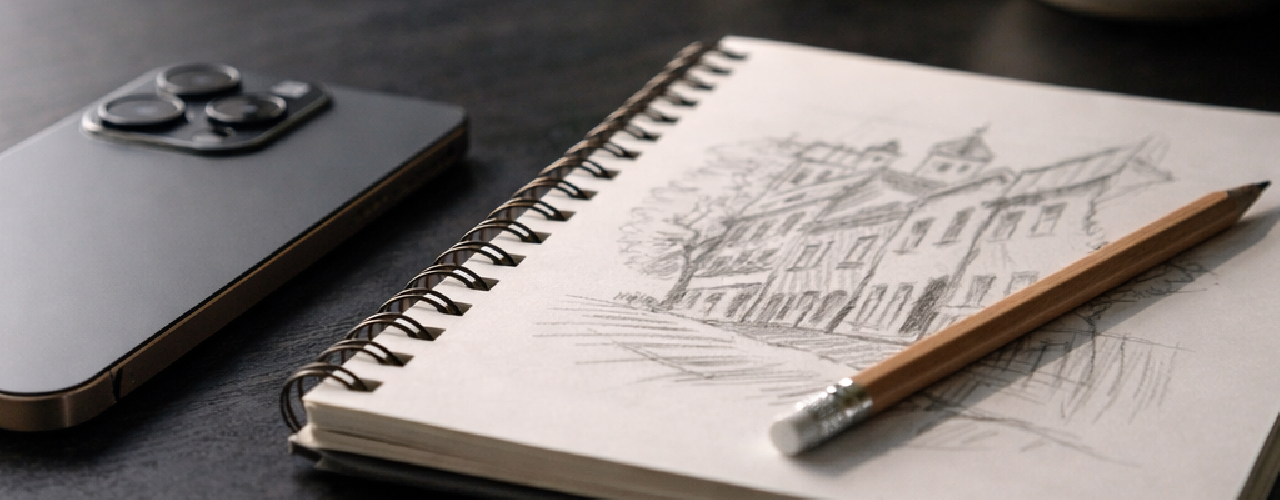
What I want, more than anything, is to sit with a sketchbook and draw something without purpose. Not to fix the world. Not to explain it. Just to be in my hands. Paper. Cardboard. Glue. Mess. Play. A kind of creativity that restores me.
A simple morning rule for digital wellbeing
Mornings are my weak spot. I think this is the same for many of us. That is when anxiety arrives and the day can feel like a wall of noise waiting on the other side of a screen.
So my simplest rule for this news detox is this. No phone until it is genuinely necessary. Nature if I can. Movement if I can. And not to do this as a productivity project (which is very me), bur rather as a signal that I can choose the pace. Wish me luck 🙂
Staying available for what matters
I am not stepping away because I care less. I am stepping back because I care too much to let the format destroy my capacity.
I want to stay available for what matters. For real conversations. For community. For the work that is mine to do. For the people I love.
If you are feeling that same nervousness, that same guilt, that same urge to both scream and hide, consider this permission. Choose depth over noise. Practice information hygiene. Keep reclaiming creativity, even in small ways, so you have something real to offer when you return.
I will be back before the year ends with one last post for 2025, a reflection on my work, what this year has shifted in me, and what I am carrying into 2026.
News Detox references:
- American Psychological Association, Monitor on Psychology: Media overload is hurting our mental health, and it offers practical guardrails for managing news and media exposure.
- JAMA Network Open: A peer reviewed study on a one week social media detox and measurable mental health outcomes, useful if you want evidence alongside your personal approach.
FAQ’s
What is a news detox and does it mean switching off from reality?
A news detox is a conscious break from constant news intake, especially breaking alerts and reactive scrolling. It does not mean ignoring reality. In this piece, a news detox means changing the format and pace: less doomscrolling, more long form journalism, and a Sunday weekly news check in that leaves space to process and stay available for what matters.
How do I do a news detox without feeling guilty or irresponsible?
Start by naming the goal as capacity, not avoidance. If constant headlines are dysregulating your nervous system, stepping back can be a form of responsibility because it helps you stay steady, present, and engaged for the long haul. A simple plan helps: reduce notifications, limit social feeds, and choose one weekly check in using long form journalism so you remain informed without being overwhelmed.
What should I read or watch during a news detox instead of doomscrolling?
Replace constant updates with slower inputs that can hold context. Try long form journalism from trusted outlets, and choose documentaries when you want depth and nuance. Pair this with a Sunday news ritual and a weekly news check in so you stay informed while also reclaiming creativity, attention, and digital wellbeing.
Want to reprint or collaborate on written work about Climate/Environmental or Social Justice Storytelling?
I welcome inquiries for republishing, co-writing, guest contributions, and creative collaborations rooted in justice, systems, and story. Reach out if my work resonates. Contact Me

I quite like reading through a post that can make people think.
Also, many thanks for permitting me to comment!
Thanks so much, I really appreciate that. I am trying to write pieces that do not just react to the noise, but create a bit more space to pause, think, and feel what is actually going on. 🙂